
What is RAG? A Practical Guide for Developers in India
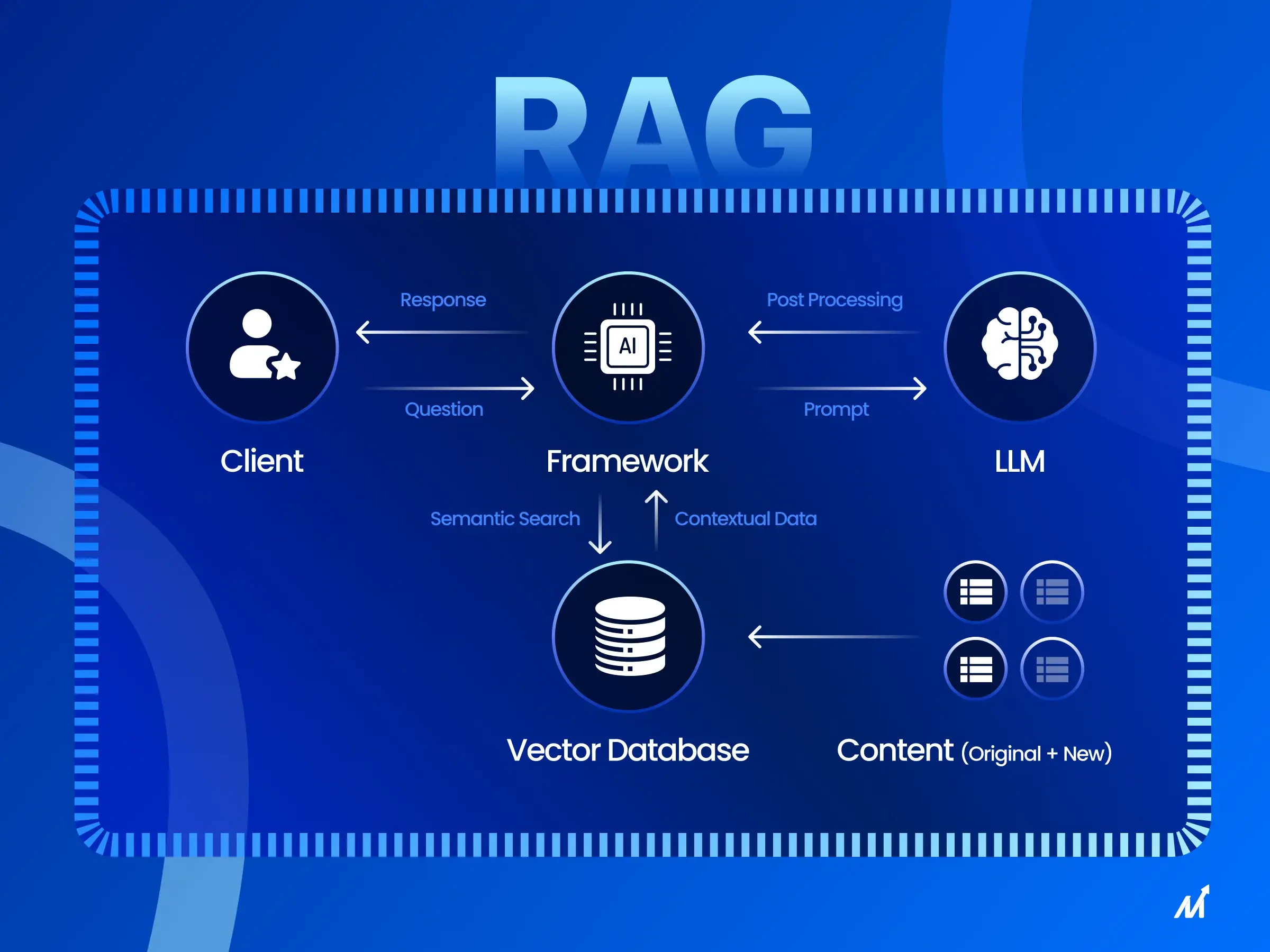
Artificial Intelligence has evolved at a breakneck speed, but Large Language Models (LLMs) still have a major flaw: they hallucinate. When asked about specific internal documents, recent local data, or proprietary company knowledge, a standard model will often guess an answer rather than admit it does not know. For developers, data scientists, and students building practical software, this is a massive hurdle. The solution to this limitation is rag, which stands for Retrieval-Augmented Generation.
Whether you are studying in Pune, building your first portfolio project, or preparing for a tech career in India, understanding rag is no longer optional. It is a core architecture used by modern tech companies to make AI reliable, accurate, and grounded in real data.
Understanding the Core Concept of RAG
To understand rag, it helps to break down the two distinct parts of the acronym: Retrieval and Augmented Generation.
- Retrieval: When a user asks a question, the system searches an external database or document repository for relevant text chunks. This database is typically a vector database containing embeddings of your specific documents.
- Augmented Generation: The system takes the user's original query and combines it with the retrieved text context, passing this combined prompt to the LLM. The model then generates an answer strictly based on the provided context.
Instead of relying purely on the static training data the model memorized months or years ago, rag gives the AI an open-book test. It looks up the right page, reads it, and summarizes the answer for the user.
Why RAG is Essential for Modern Software Development
Traditional software engineering relied on rigid databases and keyword searches. Modern applications demand natural language interfaces, but companies cannot train a new LLM every time a policy changes or a new PDF is uploaded. Here is why rag has become the industry standard:
- Cost-Effective Updates: Training or fine-tuning an LLM requires massive compute power and financial investment. Updating a vector database for a rag pipeline takes seconds and costs very little.
- Reduced Hallucinations: By forcing the model to reference specific source documents, rag drastically cuts down on fabricated facts.
- Data Privacy: Companies can keep sensitive internal documents secure while still letting employees query them using a conversational AI interface.
The Technical Components Behind a RAG Pipeline
Building a basic rag system involves several key steps and tools that developers use daily. If you are learning Python programming, you will find that the Python ecosystem makes implementing these steps straightforward.
1. Document Ingestion and Chunking
Raw text, PDFs, or database records cannot be fed directly into a retriever all at once. Developers write scripts to split large documents into smaller, manageable chunks (for example, 500 characters each) so the system can pinpoint precise information.
2. Embedding Generation
Computers do not understand text the way humans do. Using embedding models, each text chunk is converted into a vector—a long list of numbers that represents the semantic meaning of the text. Similar concepts end up close to each other in vector space.
3. Vector Storage and Retrieval
These vectors are stored in specialized vector databases like ChromaDB, FAISS, or Pinecone. When a user asks a question, the system converts the question into a vector and quickly finds the most mathematically similar text chunks stored in the database.
4. LLM Integration
Finally, frameworks like LangChain or LlamaIndex orchestrate the process, sending the retrieved context and the user query to an LLM (such as OpenAI, Anthropic, or an open-source model running locally via Ollama) to output a coherent, factual response.
How Students and Freshers Can Master RAG
For engineering graduates and job seekers aiming to stand out in the competitive Indian tech market, simply knowing theory is not enough. Employers want to see working projects in your GitHub portfolio. Here is how you can build expertise:
- Master Python Fundamentals: Almost all AI orchestration libraries are written in Python. Ensure your core programming, asynchronous requests, and API handling skills are strong.
- Build End-to-End Projects: Build a simple internal search tool that can read your college syllabus PDFs or technical notes and answer questions about them using a local open-source LLM.
- Gain Practical Exposure: Hands-on learning bridges the gap between academic theory and industry expectations. Programs that offer structured guidance and practical internships can help you apply these concepts to real-world software architectures.
As AI continues to transform every industry, the demand for developers who know how to integrate LLMs safely and accurately into production systems will only grow. Learning rag is one of the highest-return investments you can make in your technical skillset today.
To explore structured learning paths, practical tech training, and career support tailored for students and freshers, check out the offerings at FutureCorp Academy. You can also review our detailed courses or reach out to our team to discuss which technology track aligns with your career goals.
Founder, FutureCorp Academy — helping students turn classroom theory into practical, industry-ready skills.

Comments
Leave a comment
Comments are reviewed before they appear.